Pool construction disputes
They took the draw and left you with a hole in the ground.
Tell us where the build stopped and we'll take it from here.
What is still open on pool construction?
10 ways to put pressure on the other side, and they do not all close at the same time. Tell us roughly when this started.
See which ones apply to you- Chargeback4 mo
- Financing unwind12 mo
- Manufacturer certification24 mo
- Insurance channel12 mo
- Surety bond24 mo
- Licensing board48 mo
- Small claims48 mo
- File a lawsuit48 mo
- Recovery fund24 mo
- Public recordno deadline
What does it cost to sort out pool construction?
Most of what follows you can do yourself, and the parts that cost nothing are first for a reason.
Start free, today
A demand letter you can fill in, and a plain guide to small claims where you live. No account, no cost.
Finding out costs nothing
Tell us what happened and hear where you stand. If we do not think we can move the business, we say so.
One cost, paid once
Asked for after we have reviewed your file and shown you the figure, and before any work starts. Nothing after it.
We take no share
No percentage of what you get back. A recovery is paid to you by the business, and never passes through us.
The routes that bite hardest in pools.
Chargeback
Pool builds are paid in large staged draws, and a draw paid by card for work never done is the fastest route on this list. It is also the first one to close.
Surety bond
Pool building is a licensed trade in most states and a license usually means a bond. On a stalled build the bond is often the only thing left with money in it.
Licensing board
A state contractor board can review a license over an abandoned job. Abandonment mid-contract is one of the clearer complaints a board will take.
Recovery fund
Several states run a recovery fund for exactly this: a homeowner left with an unfinished build and a contractor with nothing to collect from.
Where pool construction actually goes wrong.
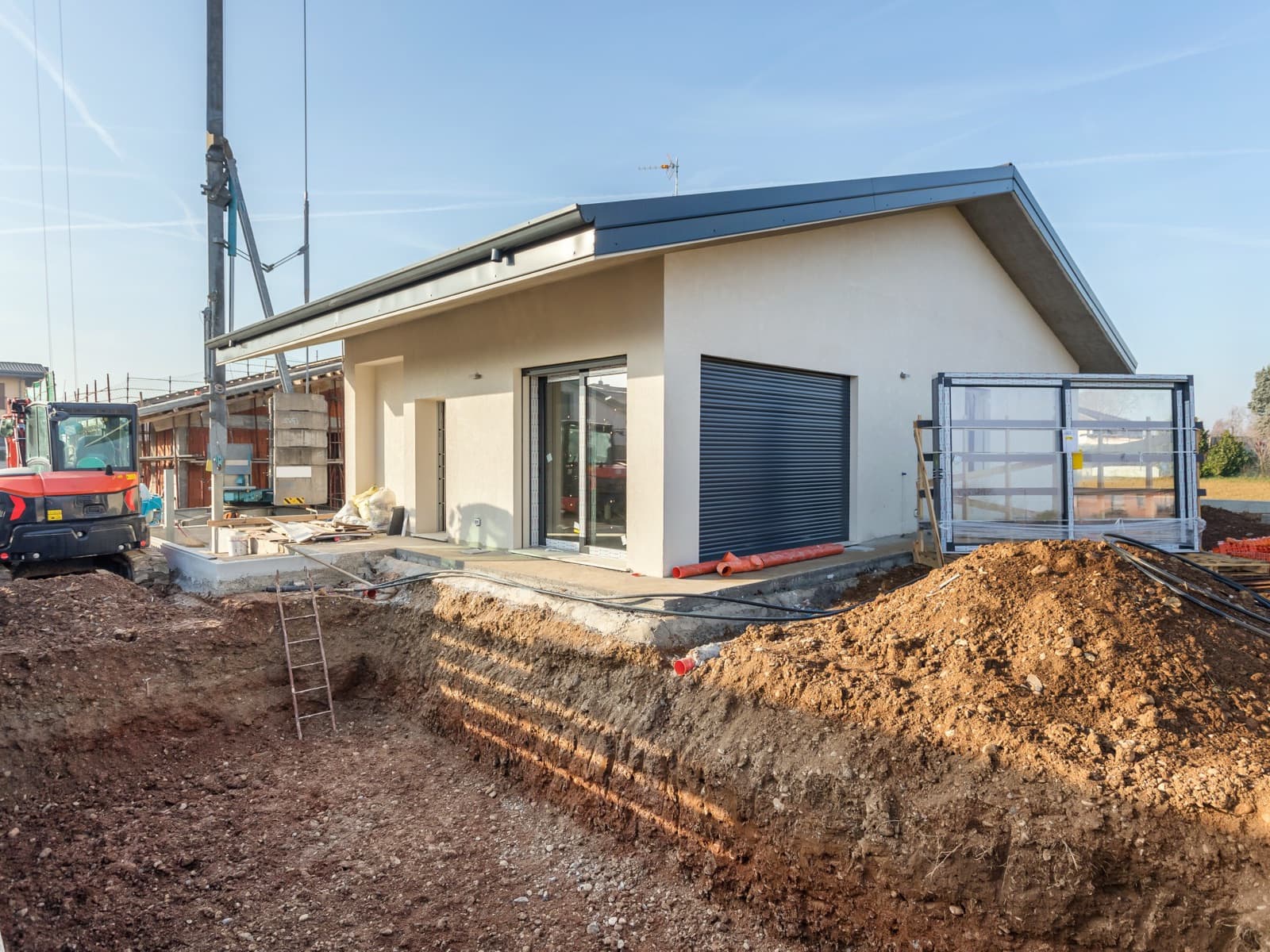
The draw schedule
Payment is tied to milestones: excavation, steel, plumbing, gunite, tile, plaster. A build that stalls right after a large draw is the single most common shape this trade produces.
Which milestones were actually reached is visible on site and in the inspection record. The gap between what was paid and what stands is countable.
Steel and gunite, the structure
Rebar spacing and shell thickness are set by the plans and are invisible the moment the shell is sprayed. Cracking and settling months later usually trace back here.
This is the part inspected before it is covered, so somebody with no stake in the dispute wrote down what they saw.
Plumbing and the pressure test
Lines are buried before the deck goes on. A leak found afterwards means excavating a finished patio, which is why a pressure test before backfill exists at all.
A test either happened and was recorded or it did not. That is a document question rather than an engineering one.
Equipment that was substituted
Pumps, heaters, filters and automation are specified by model in the contract and fitted at the end. A cheaper tier of the same brand is the substitution least likely to be noticed.
Model numbers are on the equipment pad and on your contract. Countable on the spot, whether or not the builder is answering.
Dimensions and finish against the plans
Depth, length, step placement, tile line and plaster finish all drift from the drawings, and the drift is frequently defended as an industry-standard variation when the contract allows no such thing.
The plans are a document you both signed. What was built is measurable against them with a tape.
The permit and final inspection
A pool needs a permit and a final sign-off, and barrier and safety requirements are part of it. Builds get left unfinished and uninspected, sometimes for years.
An unclosed permit is a live problem for the property as well as evidence in the dispute, and it is on a public file the builder does not control.
The three we see most.
All of it, on pool constructionConstruction that stopped partway
Pool builds are typically paid in stages tied to milestones. A build that stalls after a large draw leaves a homeowner with a hole, a payment schedule, and little leverage.
Structural and equipment problems soon after completion
Cracking, settling, persistent leaks, or equipment that was substituted for something cheaper than what the contract specified.
A finished pool that isn't what was contracted
Dimensions, depth, finish, or equipment that differ from the plans, often defended as an industry-standard variation when it isn't.
What happens if you start today.
The same day
You send us the contract, the plans, the draw schedule and what you have paid against it, plus photographs of how the site was left.
Before we ask you for anything
We pull the permit and inspection record, check the builder's license and bond, and find out whether other homeowners have complained.
Then you get a straight answer
What the gap between paid and built actually is, which routes are open, and which one we would use first. Including when we do not think it is worth pursuing.
After that it is ours
The demands, the bond claim, the board complaint and the chasing, with the file kept up to date.
We'll have pools already selected.
Questions people ask us first.
The build stopped and I have already paid most of it. What can actually be done?
This is the situation this trade produces most often, and it is why license bonds and state recovery funds exist. Several routes do not need the builder to co-operate, or even to still be trading.
The builder says the cracking is normal settling. Is it?
Some movement is normal and some is not, and the difference is an evidence question rather than an opinion one. What was inspected before the shell was covered is usually where it is settled.
Can I get another builder to finish it and still pursue the first one?
Often yes, and sometimes you have to. Document the state it was left in thoroughly before anybody touches it, because that record is the measure of what you paid for and did not get.
I paid by card for a draw on work that was never done. Does that help?
It is usually the fastest route available to you, and it is also the shortest window on the list. It runs from the payment or the date delivery was expected, not from when you found out.
There was never a permit. Does that hurt me?
It is generally a problem for the builder rather than for you. Pulling the permit is normally their obligation under the contract, and its absence is documentation of that.
Are you a law firm?
No. We are a consumer advocacy service. We prepare and pursue your advocacy file and correspond with the business on your behalf. We do not represent you in court, and if your situation needs an attorney we tell you and hand off the materials.
Disclosures
- Satisfy is not a law firm and is not a licensed insurance adjuster or public adjuster. We prepare and pursue your file and correspond with the business on your behalf; a court filing or an insurance claim is made by you, or by an independent professional you engage, using the materials we assemble. We do not represent you in litigation, arbitration, or an insurance claim.
- The windows shown on this page are illustrative for the kind of dispute selected, measured from the work rather than from the dispute. They are an estimate and not a legal opinion. Yours depend on your contract, your policy, your card issuer's rules and your state's law, and some will already have closed. We do not guarantee that any route is still open to you.
- What goes wrong with pool construction is described here in general terms. It is not an assessment of your own job and it is not technical advice about whether any particular work was done correctly.